Monday, November 20, 2023

The Poetry of Tommy Pico

        Tommy Pico works very hard to avoid falling into stereotypes. As both an indigenous poet of the Kumeyaay Nation and a self-described “technology-addicted New Yorker,” much of his work attempts to square two identities which society perceives as incompatible. The second entry in his tetralogy of poetry books, Nature Poem, centers around his distaste for the titular form, the way it becomes “fodder for the noble savage / narrative.” Rather than reinforce the expectation that Native people should extol the beauty and power of nature, Pico writes that he would “slap a tree across the face” and promptly changes gears to a story about a hookup at a pizza parlor. He performs this move frequently throughout his poetry, uncomfortably juxtaposing digressions on nature and the genocide of his ancestors with his high-speed modern day life of dating apps and concerts. 

        Pico’s writing shows how he feels that he lacks the freedom to love nature without playing into a centuries-old system of oppression in which he is categorized as less than human. As someone who was raised to love and cherish nature and the outdoors, such a freedom feels like it should be a right for every person on this Earth. Hearing Pico’s concerns feels upsetting, as does the implicit question of whether my own “outdoorsy” upbringing would have transpired were it not for the historical subjugation of Native peoples. Pico’s poetry interests me precisely because it does not speak to my experience. In its determination to carve out space for its own voice, the poetry forces me as the reader to consider the larger forces shaping my lived experience and how they might affect others differently. While Pico’s tetralogy of poems is complete for the moment, I look forward to whatever future projects he turns his attention to next.

Buy Nature Poem here!

Books on Google Play 


Saturday, November 18, 2023

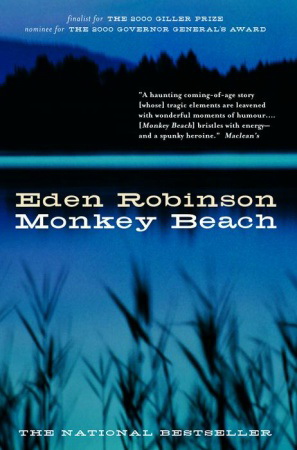
Journey to Monkey Beach with Eden Robinson

“You should not go to Graceland without an Elvis fan. It’s like Christmas without kids—you lose that sense of wonder. . .”

So writes Indigenous Canadian author Eden Robinson in Sasquatch at Home: Traditional Protocols & Modern Storytelling, a trilogy of short stories. In the second story, she uses fiction-prize money to take her Elvis-obsessed mother to The King’s old mansion Graceland in Tennessee. Witty and heartfelt, sharp and grounded, and so seriously quirky, it was quite the tale. I had to check out more of Robinson’s work.

Robinson is a member of the Haisla and Heiltsuk First Nations. Her profile on her publisher’s website lists her hobbies: “Shopping for the Apocalypse, using vocabulary as a weapon, nominating cousins to council while they’re out of town, chair yoga, looking up possible diseases or syndromes on the interwebs, perfecting gluten-free bannock and playing Mah-jong.” Stephanie Chou writes: “Eden Robinson has the most contagious laugh on this side of the globe. She shares a birthday with Edgar Allan Poe and Dolly Parton and is certain this affects her writing in some way. Combine these sensibilities with her early influences of Stephen King and David Cronenberg, and it’s natural that Eden’s writing is at once humorous and dark.”

“Humorous” and “dark” are certainly applicable adjectives for Robinson’s first novel, Monkey Beach. Wise men say only fools rush in, but I unfortunately couldn’t help falling in love with this book. Published in 2000, it follows the young Lisamarie (named for Elvis’ daughter) as she struggles with her little brother’s mysterious disappearance at sea. The novel swims into Lisa’s memories of a childhood on the Canadian coast, and interpolates Indigenous mythology into daily life. Lisa takes off to find her brother on the mysterious Monkey Beach, embarking on an oft-surreal journey of self-discovery and sasquatches. I’ve never before encountered “Northern Gothic” (as opposed to Southern Gothic) as a genre, and this was the best possible introduction.

Monkey Beach won the Ethel Wilson Fiction Prize, awarded annually to a fiction writer from Yukon or B.C. In 2020, the novel was also adapted into a film that won multiple awards at the American Indian Film Festival. Emily St. John Mendel (author of the acclaimed Station Eleven, Sea of Tranquility, and The Glass Hotel) lists it among her favorite books. Mendel laments that it got little recognition outside of Canada -- it was not marketed much to U.S. audiences. I hope, however, that more readers get their hands on this wonderful book, in the U.S. and beyond. It certainly left me all shook up.


You can buy Monkey Beach from us at this link:

https://eagleeyebooks.com/book/9780676973228


Friday, November 17, 2023

Celebrating Native American Authors and their new releases

by Jamille Christman

Native American culture has always been steeped in rich storytelling.  Everything around them is full of stories, from the fantastical and hopeful to cautionary tales meant to warn against the dangers of the world.  While this can be a very deep part of their identity, their stories are often not heard and their voices are often silenced.  While things in the publishing world have gotten better, Native American representation trails behind other minority groups.  Zippia statistics show that only .4% of published authors are Native Americans.  Since 2018, published Native American authors have steadily decreased, even though minorities in publishing are getting more attention.  Representation is so very important, and will pave the way for new generations of Native Americans writing gripping and important stories. This Thanksgiving and Native American Heritage Month, I want to celebrate by highlighting some of the most astonishing stories written by Native Americans about Native Americans this year, and keep these stories alive and thriving.


Bad Cree
By Jessica Johns (Cree)

In this gripping, horror-laced debut, a young Cree woman’s dreams lead her on a perilous journey of self-discovery that ultimately forces her to confront the toll of a legacy of violence on her family, her community and the land they call home.
“A mystery and a horror story about grief, but one with defiant hope in its beating heart.” —Paul Tremblay

Buy Here


Never Whistle at Night
By Shane Hawk (Cheyenne-Arapaho/Hidatsa/Potawatomi) and Theodore C. Van Alst Jr. (Mackinac Bands of Chippewa/Ottawa)

These wholly original and shiver-inducing tales introduce readers to ghosts, curses, hauntings, monstrous creatures, complex family legacies, desperate deeds, and chilling acts of revenge. Introduced and contextualized by bestselling author Stephen Graham Jones, these stories are a celebration of Indigenous peoples’ survival and imagination, and a glorious reveling in all the things an ill-advised whistle might summon.
Buy Here


The Storyteller
By Brandon Hobson (Cherokee)

A middle-grade adventure. Ziggy's mother disappeared when he was very young, making her one of many Native women who've gone mysteriously missing. Ziggy and his sister, Moon, want answers, but nobody around can give them.
Once Ziggy gets it in his head that clues to his mother's disappearance may be found in a nearby cave, there's no stopping him from going there. Along with Moon, Alice, and his best friend, Corso, he sets out on a mind-bending adventure where he'll discover his story is tied to all the stories of the Cherokees that have come before him.
Buy Here

Don’t Fear the Reaper
By Stephen Graham Jones (Blackfeet)

December 12th, 2019, Jade returns to the rural lake town of Proofrock the same day as convicted Indigenous serial killer Dark Mill South escapes into town to complete his revenge killings for thirty-eight Dakota men hanged in 1862, escapes from his prison transfer due to a blizzard, just outside of Proofrock, Idaho., in this riveting sequel to My Heart Is a Chainsaw from New York Times bestselling author Stephen Graham Jones.
Buy Here


Godly Heathens: A Novel (The Ouroboros #1)
H.E. Edgmon (Seminole)

Gem Echols is a nonbinary Seminole teen living in the tiny town of Gracie, Georgia. Known for being their peers’ queer awakening, Gem leans hard on charm to disguise the anxious mess they are beneath. The only person privy to their authentic self is another trans kid, Enzo, who’s a thousand long, painful miles away in Brooklyn.
When Gem is attacked by a stranger claiming to be the Goddess of Death, Willa Mae saves their life and finally offers some answers. She and Gem are reincarnated gods who’ve known and loved each other across lifetimes. But Gem hasn’t always been the most benevolent deity. They’ve made a lot of enemies, like the Goddess of Death, who will keep coming.
Buy Here


White Horse
By Erika T. Wurth (Apache/Chickasaw/Cherokee)

"This ghost story is a perfect example of new wave horror that will also satisfy fans of classic Stephen King." ―Silvia Moreno-Garcia, author of The Daughter of Doctor Moreau and Mexican Gothic

Erika T. Wurth's White Horse is a gritty, vibrant debut novel about an Indigenous woman who must face her past when she discovers a bracelet haunted by her mother’s spirit


To Shape a Dragon’s Breath
By Moniquill Blackgoose (Seaconke Wampanoag)

A young, Indigenous woman enters a colonizer-run dragon academy after bonding with a hatchling-and quickly finds herself at odds with the "approved" way of doing things-in the first book of a brilliant new fantasy series. The remote island of Masquapaug has not seen a dragon in many generations-until fifteen-year-old Anequs finds a dragon's egg and bonds with its hatchling. Her people are delighted, for all remember the tales of the days when dragons lived among them and danced away the storms of autumn, enabling the people to thrive. To them, Anequs is revered: a Person Who Belongs to a Dragon but not to the Anglish conquerors of her land. They have a very specific idea on how a dragon should be raised-and reluctantly allowed her to enroll in a proper Anglish dragon school on the mainland. If she cannot succeed there, then her dragon will be destroyed. For the world needs changing-and Anequs and her dragon are less coming of age in this bold new world than coming to power
Buy Here


The Council of Dolls
Mona Susan Power (Sioux)

LONGLISTED FOR THE NATIONAL BOOK AWARD
The long-awaited, profoundly moving, and unforgettable new novel from PEN Award-winning Native American author Mona Susan Power, spanning three generations of Yanktonai Dakota women from the 19th century to the present day.
From the mid-century metropolis of Chicago to the windswept ancestral lands of the Dakota people, to the bleak and brutal Indian boarding schools, A Council of Dolls is the story of three women, told in part through the stories of the dolls they carried....
Buy Here

Swim Home to the Vanished
Brendan Shay Basham (Navajo)
When the river swallowed Kai, Damien's little brother didn't die so much as vanish. Wanting to leave his grief behind he drives as far away to start over and finds himself in a village. Everyone mistrust the new stranger in this little village except a kind woman who takes him in after she also lost her daughter. Ana Maria gives him a place to stay and a job But how long can he resist the rumors swirling through town suggesting Ana Marie might have had something to do with her daughter's death? Marta, who is Ana Marie's other daughter is driven by a fierce need for revenge? Swiftly, Damien finds himself caught in a power struggle between the brujas, a whirlwind battle that threatens to sweep the whole village out to sea


The Lost Journals of Sacajewea
Debra Magpie Earling (Bitterroot Salish)

"In my seventh winter, when my head only reached my Appe's rib, a White Man came into camp. Bare trees scratched sky. Cold was endless. He moved through trees like strikes of sunlight. My Bia said he came with bad intentions, like a Water Baby's cry."

Among the most memorialized women in American history, Sacajewea served as interpreter and guide for Lewis and Clark's Corps of Discovery. In this visionary novel, acclaimed Indigenous author Debra Magpie Earling brings this mythologized figure vividly to life, casting unsparing light on the men who brutalized her and recentering Sacajewea as the arbiter of her own history.
Buy Here


A Song Over Miskwaa Rapids
Linda LeGarde Grover (Ojibwe)

When a rock is dislodged from its slope by mischievous ancestors, the past rises to meet the present, and Half-Dime Hill gives up a gruesome secret it has kept for half a century. 
Margie Robineau, in the midst of a fight to keep her family's long-held allotment land, uncovers events connected to a long-ago escape plan across the Canadian border, and the burial of not one crime but two. Dale Ann is confronted by her own long-held secrets and the truth that the long ago and the now, the vital and the departed are all indelibly linked. Margie prepares her statement for the tribal government, defending her family's land from a casino development and sorting the truths of Half-Dime Hill from the facts that remain there. Throughout the narrative, a chorus of spirit women gather in lawn chairs with coffee and cookies to reminisce, reflect, and speculate, spinning the threads of family, myth, history, and humor.
Buy Here

Birding While Indian: A Mixed-Blood Memoir
Thomas C. Gannon (Cheyenne)

A hilarious and humane memoir that spans more than fifty years of childhood walks and adult road trips to deliver, via a compendium of birds recorded and revered, the author's life as a part-Lakota inhabitant of the Great Plains. Great Horned Owl, Sandhill Crane, Dickcissel: such species form a kind of rosary, a corrective to the rosaries that evoke Gannon's traumatic time in an Indian boarding school in South Dakota, his mother's devastation at racist bullying from coworkers, and the violent erasure colonialism demanded of the people and other animals indigenous to the United States.


Venco
Cherie Dimaline (Metis)
Lucky St. James a millennial Metis and her grandmother, Stella are about to be evicted.  After hearing an otherworldly energy in the wall, she finds an old spoon with SALEM etched into it. Lucky is familiar with the magic of her indigenous ancestors, but she has no idea that the spoon connects her to a teeming network of witches across North America who have anxiously awaited her discovery. Hiding in plain sight, a large company with vast resources VenCo, an anagram of "coven" has awaited for the seven spoons to come together returning the network of witches to their rightful power while a very powerful witch hunter as old as witchcraft itself hunts them. Lucky and Stella must go to the showdown in the magical city of New Orleans that will determine if the witches will remain underground or usher a new beginning
Buy Here

See where the nations these authors and stories take place


Monday, October 23, 2023

How Samhain shaped Halloween

 
Every culture going back to ancient times celebrates the change of Summer to Fall.  Halloween, a holiday we currently celebrate during the Fall equinox, has specific rituals with ancient roots that keep hold even to this day. While it is a holiday shaped by horror, it is all in good jest.  It is a holiday of candy, ghouls, horror, and great costumes.  How did this unique set of traditions take shape?  Where did the elements of Halloween come from?  

Samhain is a holiday celebrated by the Celtic Pagans going as far back as 5,000 years and possibly more. In fact, it is so old that it was celebrated before the Celts even migrated to Ireland.  Many Halloween rituals come from this three-day celebration.  Samhain, pronounced SOW-hen, marked the Celtic new year.  It was celebrated around the change of the season, not necessarily the same calendar date every year.  The celebration started based on the seasonal change, whenever it occurred.  During that sacred change of season, the veil would thin between this world and the Otherworld. In Celtic mythology, the Otherworld contained the spirits of the fae folk, mythological beings, and deities both good and bad.  The fae folk and those in the Otherworld could walk among the mortals, and if a person wasn't careful, they might find themselves in an unearthly place during those three days.  To protect themselves from dangerous fae, some carried talismans or wore certain things a fae would like in order to mask themselves as one of the fae folk or seem friendly to them. The celebration kicked off with bonfires and big feasts, as the coming cold winter promised only minimal food. While animal sacrifice was often thought to be performed by the Celts during this festival, in actuality, livestock was herded from the highlands to be slaughtered to store for the upcoming winter.  Often offerings to the gods or fae took the form of baked breads and other treats. The celebration was three days of our Halloween, Thanksgiving and New Years rolled into one.

Samhain has much lore associated with it through hundreds of years of celebration. One goddess, “The Morrigan,” is known as the goddess of Death, Fate and Victory in battles, and often was celebrated in this time.  The Morrigan is also known as the ‘phantom queen’ or the ‘queen of the fae folk.’  Sacrifices and offerings were dedicated to The Morrigan to ensure good will and safe fates for the New Year.


Many Irish, Scottish, Welsh and English cultures passed some of these rituals down.  Many were brought to the US during the great migration, and some were replaced with elements of our own culture.  Turnips shaped for the Wil’ O Whisps, a spirit in the bogs of the UK, eventually became a Jack O’ Lantern. Souvenirs and talismans worn during Samhain would become a costume. Costume lore changed to fit a more Christian image of evil spirits and ghosts, eventually even becoming characters based in fiction and then any costume of the imagination.  Candy being given freely is probably the most widespread culture during the harvest in many cultures.  Everyone having a feast and celebrating is a consistent element during the Fall equinox.  

One of the most striking things about this season is it is a celebration of fun and gathering.  No matter how terrifying and scary we find the elements of death and facing mortality, it is often a fun holiday of the celebration of the unknown, our dead loved ones, terror remedied by togetherness, and the surplus of food before the cold sets in.  Whether you celebrate Samhain, the Christian All-Saints day, The Mexican El Dia de los Muertos, the Japanese Higan, or The Moon Festival, coming together to celebrate the passage of time and the old ways is something we can all hope never goes out of style. We adapt new rituals to these holidays, but continue to keep the meanings of celebrating creativity, fun, and those who have passed through the veil of time.

Monday, October 16, 2023

Ryan Gosling: Indie Prince of Halloween

2023 brought the masses a Ryan Gosling renaissance.


“I’m just Ken,” he sings in the year’s smash hit film Barbie. “Anywhere else, I’d be a ten.” That song debuted at number 87 on the Billboard Hot 100.


Those familiar with his performance in the 2016 movie musical La La Land aren’t surprised the man can croon. He did do two seasons of singing and dancing on the Mickey Mouse Club as a kid. But for those who prefer something less mainstream -- and more eerie -- Ryan “Baby Goose” Gosling’s old discography contains a hidden, chilling gem.


Turns out, the Canadian actor is not only an indie darling and a blockbuster heartthrob, but also a gothic folk rock musician. Gosling is six feet tall, but makes music like he’s six feet under. His band, Dead Man’s Bones, consisted of him and a friend, Zach Shields (who you may know as the writer for Godzilla VS Kong), and together, they made the most Halloween-y music.


2009 brought the masses (or at least several YouTube & MySpace users) a debut self-titled album from Dead Man’s Bones. Their first music video came earlier, in December of 2008. User taylorblue on The Insider wrote about it then: “I really like this song, In the Room Where You Sleep, I can see me listening to it on my iPod. How amazing is Ryan anyways? What a great Boxing Day present.”


Dead Man’s Bones’ skeleton crew of Shields & Gosling first met in 2005. Our trusted correspondents at Wikipedia report the duo bonding over a mutual love of the Disney ride “Haunted Mansion” (many people seem to like it -- the ride got a 2023 movie adaptation too). The friends’ macabre fascinations were nothing new: Gosling’s family left his childhood home when they became convinced the house was haunted, and Shields had so intense a childhood obsession with ghosts that he was put into therapy. A love of all things creepy, dark, and melancholy thus permeates their songs.


Their sound is like your most pretentious millennial friend’s favorite indie band covering “Monster Mash.” Like Elvis joining a folk band and recording a Tim Burton soundtrack. Like something written for a children’s chorus to sing over a “monster-ghost-love-story” play. Well, the bit about the play is actually accurate. According to Anti Magazine, “This album was not supposed to be an album.” But costs for a stage show were “prohibitive,” and so we have this album.


The children’s chorus still plays a part. Started by Red Hot Chili Peppers bassist Flea, the Silverlake Conservatory of Music has a children’s choir that adds a whimsical but creepy-in-the-way-only-kids-can-be layer to Gosling’s vocals on the album. According to Pitchfork, the children put in work: rehearsals every Sunday for months. Their wrap party included “a bouncy castle, a taco truck, and a pinata.”
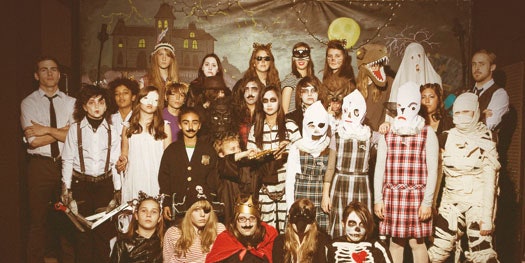
Shields (Left); Gosling (Right); Silverlake Conservatory Children’s Choir (Middle)

The band’s production process paved the way for true artistry. They had a series of self-imposed rules to guarantee an authentic, raw, and charmingly imperfect sound: no more than three takes per song, and no click tracks (used to synchronize sound recordings). Shields and Gosling also played all instruments themselves. After the two cello players invited for the track “Buried in Water” showed up without knowing a lick of cello, Gosling taught himself to play it. He told Rolling Stone: “It wasn’t as hard as they were making it out to be!”


Dead Man’s Bones toured the country in Halloween season 2009. In every city, they performed with a local children’s choir. The concerts were well-received; in a review from the Eagle Rock Center of the Arts 2010 performance, Angel Baker writes: “Pompadours and pin up girls, secretary sweaters and more flannel than a Walmart in Wyoming, Eagle Rock was alight with vaudeville aficionados on their tip-toes to experience the resurrection of the variety hour.”


The band’s song “In the Room Where You Sleep” was featured on the soundtrack for horror film The Conjuring, and “Lose Your Soul” was in the closing credits of a French film, Age of Panic. Their influence extends to other musicians too; the Polish extreme metal band Behemoth was inspired by Dead Man’s Bones to also use a kids’ choir on their album I Loved You at Your Darkest.


But unlike “I’m Just Ken” off the Barbie soundtrack, nothing Dead Man’s Bones created ever charted. Ryan Gosling starred in ever-bigger flicks, and Zach Shields gained more and more work as a producer and writer, and it seems that Dead Man’s Bones fell to the wayside. According to Dazed, “their Twitter account – inactive since 2012 – still links to their Myspace page.”


Nonetheless, the band continues to cultivate a cult following, and finds new listeners to this day who delight in its weird, folksy, lonesome tunes and waltzes, punctuated by handclaps and kids’ exuberant yawping. I myself first heard of them because of an Eagle Eye Book Shop customer!


So this Halloween season, do yourself a favor, and check out this fun little album.


And if you need yet more reasons to love Ryan Gosling, click the link to check out this book, available on our website: 100 Reasons To Love Ryan Gosling
Friday, September 22, 2023

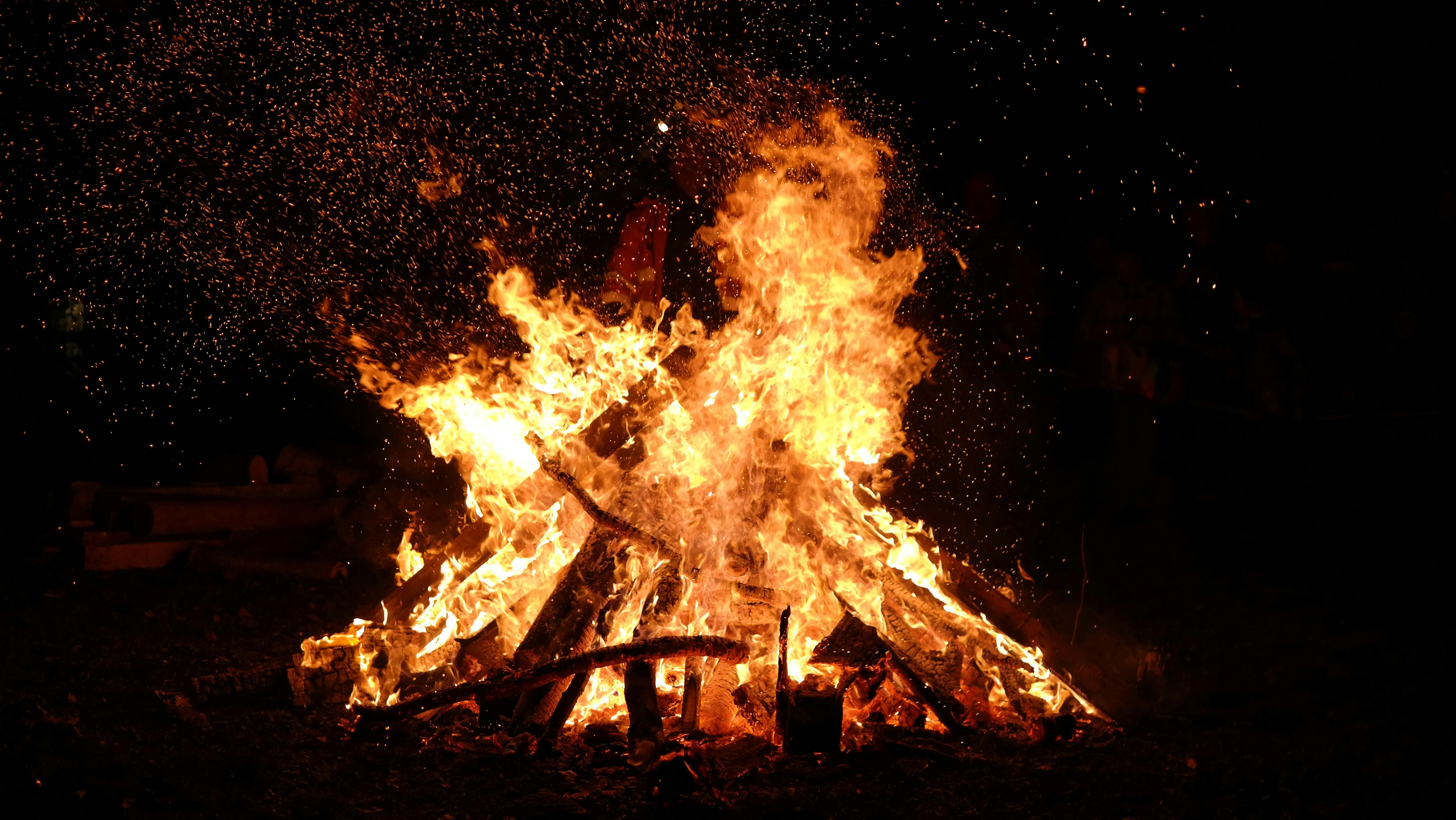
Fuel to the Fire: Book Burning in History

 Bonfire Photos, Download The BEST Free Bonfire Stock Photos & HD Images

 In June of 2022, a specially designed fireproof copy of The Handmaid’s Tale by Margaret Atwood was auctioned for $130,000 USD to support PEN America’s efforts to fight book bans. A delightfully over-the-top promotional video shows Atwood blasting the book with a flamethrower, from which it emerges unscathed. While constructing all future books out of heat-resistant aluminum and space-age steel wouldn’t actually solve any problems, the fireproof book is an act of defiance against that recurring symbol of fear and anti-intellectualism, the bonfire. It announces that the written word can always adapt to outlast the forces that would try and destroy it.

Looking to history supports this claim. Despite sustaining irrecoverable losses over the millennia, literature has survived, and while fireproof editions may be the latest innovation in this long conflict, past societies made many innovations of their own. Let’s take a look at some ways in which texts of the past have been saved from the flames.

In the ancient world, a library itself can be considered a remarkable feat of the imagination. A prospect first available only to royalty, the gathering together of texts for their protection and study has remained a cornerstone of the literary world. The library of Ashurbanipal, king of the Assyrian Empire in the 7th century BCE, has been called by H. G. Wells "the most precious source of historical material in the world," and contained within its collection the legendary Epic of Gilgamesh. Ashurbanipal, a lover of literature, collected tablets from across his empire for preservation in his great library. Unfortunately, he was also a cruel and iron-fisted military leader of an empire hungry for growth. He used his empire’s expansion as a means to expand his collection, taking for his own the recorded knowledge of his vassal states until they eventually stage a rebellion, setting fire to the library in 612 BCE. Ironically, the heat of the fire baked the clay tablets stored inside, allowing them to be preserved for our viewing today. However, the wax boards, leather scrolls, papyrus, and other texts were destroyed. The knowledge of the library, conscripted by those in power, was forever lost to those to whom it belonged.

With the advent of the Protestant Reformation in the 16th century, book burning in Europe reached a fevered height. Martin Luther and the Catholic Church both used book burning as a political tool to alter public opinion. The efficacy of the printing press made complete eradication of controversial texts almost impossible, but both sides sought to utilize public book burnings to convey the ideological incompatibility between the old and the new. Rather than to institutions of church or state, it fell to private citizens, wealthy antiquarians, to preserve the endangered writings of the time. Even a single manuscript tucked away on a shelf can carry its knowledge to the future, its messages alive and well. Sir Robert Cotton makes a perfect example, possessing a rare book collection which surpassed that of the crown. His collection included the original bound manuscript of Beowulf and a fifth-century copy of the Greek Bible, among other treasures. As a secular private library, Cotton’s collection was safe from the shifting political tides of religious allegiance, allowing its contents to survive even today.

Perhaps the most infamous book burners in history, the Nazis waged a ceaseless war against any text which did not reflect their particular worldview. No library, institutional or private, was outside their reach, and the materials held at the Yiddish Scientific Institute was a particular target. Conscripted Jewish workers, nicknamed the Paper Brigade, began smuggling away books and other items from the Institute, secreting them away throughout the ghetto or passing them along to trustworthy outsiders. Two of the Brigade’s leaders, Abraham Sutzkever and Shmerke Kaczerginski, managed to eventually escape imprisonment, but the majority of the members were murdered. However, the group succeeded in saving between 30 and 40 percent of the irreplaceable Institute collection, what is now the largest collection of material about Jewish life in Eastern Europe in existence. Against the overwhelming political and martial force of the Nazis, the humble potato sack became a safer place for valuable books than even a respected research institute.

These anecdotes all demonstrate the clear value of the individual in preserving knowledge. Books have been burned by invading armies and established social institutions alike, but there are always those who can see past the short-term manipulation tactics and into the future. Whether you are a king, prisoner, or anything in between, your efforts could save a work of art or scholarship from destruction. Keep the works you value close. While systemic values may change, the preservation of knowledge by the individual ultimately benefits all. 

 For more on the topic, check out Richard Ovenden's Burning the Books: A History of the Deliberate Destruction of Knowledge

Thursday, September 14, 2023

scary stories to ban in the dark


Halloween is poking its little head around the corner -- for me, a deeply nostalgic holiday. Children are often drawn to the macabre and the weird, because that’s their existence: growing pains, lost teeth, with new dangers learned about and confronted and not yet made peace with. Halloween is the season to celebrate their most creepy selves, but the horror section of school libraries is always open, with books that let kids face fears head-on. I’m sure others can relate to younger me begging the school librarian for directions to the scary stuff. It was a sparse section then, in the early 2000s, with its crowning jewel being Alvin Schwartz’ three-part series “Scary Stories to Tell in the Dark.”


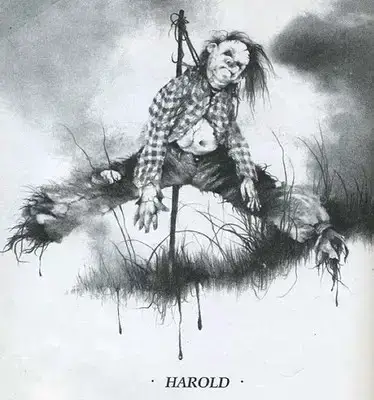
Y’all remember those books: bite-size tales of ghosts and ghouls, death and mayhem, accompanied by Stephen Gammell’s iconically horrifying illustrations in dripping black and white. They’ve been the stuff of nightmares for several generations. But October’s a good time to reminisce on “Scary Stories” not only because of Halloween; the first through seventh of the month also marks Banned Books Week. According to the ALA Office for Intellectual Freedom, Scary Stories was, between 1990-1999, the most challenged book in America. In the 00s, it moved down to number 7.


An example illustration


Parent groups, individual parents, and even a legislative action committee raised concerns, claiming that some of the disturbing or violent content was not appropriate for children. In a 1993 interview with Chicago Tribune, Sandy Vanderburg, a mother former teacher, brought up perhaps a common complaint about the stories: "There's no moral to them. The bad guys always win. And they make light of death. There's a story called `Just Delicious' about a woman who goes to a mortuary, steals another woman's liver, and feeds it to her husband. That's sick." In the same article, the author was compared to serial killer Jeffrey Dahmer.

Schwartz was unphased by the controversy. In an interview with Inverse, Cody Meirick (creator of Scary Stories: A Documentary) said, “Alvin Schwartz really loved the fact that his books were being banned. The attention to censorship within schools and libraries was just beginning to take shape around the time of his passing in the early 1990s. The American Library Association really started tracking and making lists in the mid-1980s, which was when his books began to really take off. But Alvin loved it and thought it was great publicity.” There is something particularly appealing about the controversial stuff when you’re younger, isn’t there? The books continue to garner fans, and even received a film adaptation in 2019.

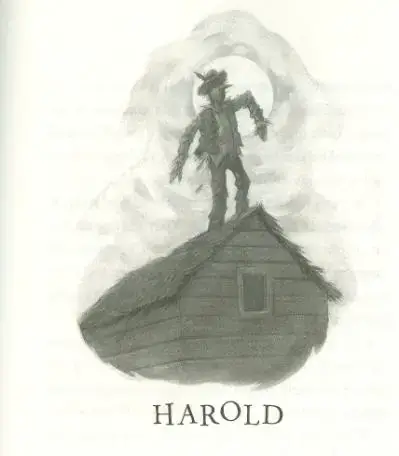
The first volume of “Scary Stories” was also republished on its 30th anniversary with less-nightmarish illustrations, now done by illustrator Brett Helquist, a former missionary for the Church of Jesus Christ of Latter Day Saints who is best known for his drawings in the 13 “Series of Unfortunate Events” books. Though gorgeous in their own right, these new “Scary Stories" illustrations just didn’t do it for fans of Gammell’s OG drawings. In 2017, the books were republished with the original artwork. 

Newer cover by Helquist


Scary Stories to Tell in the Dark: Gammell vs. Helquist
An example of Helquist's illustration

Flipping back through “Scary Stories to Tell in the Dark” as a grown adult, I was impressed by its packed bibliography, several spanning pages in a book that doesn’t have that many pages to begin with. Schwartz was a passionate folklorist, and put great research into his work. In an interview with Language Arts Magazine, he said of his process: “Basically, what I do with every book, is learn everything I can about the genre. This will involve a lot of reading and scholarly books and journals and sometimes discussions and scholarly folklorists... In the process of accumulating everything on a subject, I begin setting aside things that I particularly like. What's interesting is that eventually patterns emerge.” Wherever you stand on the question of how much violence or horror young readers should be exposed to, you can’t deny that a monstrous amount of work went into these books, and that even today, they remain a key title in the world of creepy fiction, as well as a contested title for concerned parents.

The 20th Edition of the Decatur Book Festival

The Decatur Book Festival is returning for its 21st year, and that means it's time to celebrate. The Festival is taking place across 11 ...