Monday, October 23, 2023

How Samhain shaped Halloween

 
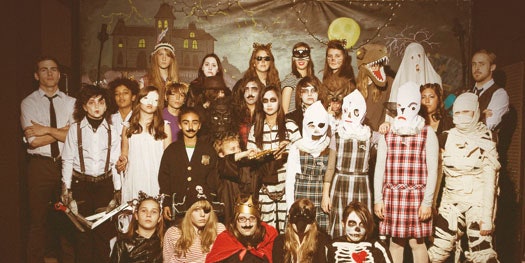
Every culture going back to ancient times celebrates the change of Summer to Fall.  Halloween, a holiday we currently celebrate during the Fall equinox, has specific rituals with ancient roots that keep hold even to this day. While it is a holiday shaped by horror, it is all in good jest.  It is a holiday of candy, ghouls, horror, and great costumes.  How did this unique set of traditions take shape?  Where did the elements of Halloween come from?  

Samhain is a holiday celebrated by the Celtic Pagans going as far back as 5,000 years and possibly more. In fact, it is so old that it was celebrated before the Celts even migrated to Ireland.  Many Halloween rituals come from this three-day celebration.  Samhain, pronounced SOW-hen, marked the Celtic new year.  It was celebrated around the change of the season, not necessarily the same calendar date every year.  The celebration started based on the seasonal change, whenever it occurred.  During that sacred change of season, the veil would thin between this world and the Otherworld. In Celtic mythology, the Otherworld contained the spirits of the fae folk, mythological beings, and deities both good and bad.  The fae folk and those in the Otherworld could walk among the mortals, and if a person wasn't careful, they might find themselves in an unearthly place during those three days.  To protect themselves from dangerous fae, some carried talismans or wore certain things a fae would like in order to mask themselves as one of the fae folk or seem friendly to them. The celebration kicked off with bonfires and big feasts, as the coming cold winter promised only minimal food. While animal sacrifice was often thought to be performed by the Celts during this festival, in actuality, livestock was herded from the highlands to be slaughtered to store for the upcoming winter.  Often offerings to the gods or fae took the form of baked breads and other treats. The celebration was three days of our Halloween, Thanksgiving and New Years rolled into one.

Samhain has much lore associated with it through hundreds of years of celebration. One goddess, “The Morrigan,” is known as the goddess of Death, Fate and Victory in battles, and often was celebrated in this time.  The Morrigan is also known as the ‘phantom queen’ or the ‘queen of the fae folk.’  Sacrifices and offerings were dedicated to The Morrigan to ensure good will and safe fates for the New Year.


Many Irish, Scottish, Welsh and English cultures passed some of these rituals down.  Many were brought to the US during the great migration, and some were replaced with elements of our own culture.  Turnips shaped for the Wil’ O Whisps, a spirit in the bogs of the UK, eventually became a Jack O’ Lantern. Souvenirs and talismans worn during Samhain would become a costume. Costume lore changed to fit a more Christian image of evil spirits and ghosts, eventually even becoming characters based in fiction and then any costume of the imagination.  Candy being given freely is probably the most widespread culture during the harvest in many cultures.  Everyone having a feast and celebrating is a consistent element during the Fall equinox.  

One of the most striking things about this season is it is a celebration of fun and gathering.  No matter how terrifying and scary we find the elements of death and facing mortality, it is often a fun holiday of the celebration of the unknown, our dead loved ones, terror remedied by togetherness, and the surplus of food before the cold sets in.  Whether you celebrate Samhain, the Christian All-Saints day, The Mexican El Dia de los Muertos, the Japanese Higan, or The Moon Festival, coming together to celebrate the passage of time and the old ways is something we can all hope never goes out of style. We adapt new rituals to these holidays, but continue to keep the meanings of celebrating creativity, fun, and those who have passed through the veil of time.

Monday, October 16, 2023

Ryan Gosling: Indie Prince of Halloween

2023 brought the masses a Ryan Gosling renaissance.


“I’m just Ken,” he sings in the year’s smash hit film Barbie. “Anywhere else, I’d be a ten.” That song debuted at number 87 on the Billboard Hot 100.


Those familiar with his performance in the 2016 movie musical La La Land aren’t surprised the man can croon. He did do two seasons of singing and dancing on the Mickey Mouse Club as a kid. But for those who prefer something less mainstream -- and more eerie -- Ryan “Baby Goose” Gosling’s old discography contains a hidden, chilling gem.


Turns out, the Canadian actor is not only an indie darling and a blockbuster heartthrob, but also a gothic folk rock musician. Gosling is six feet tall, but makes music like he’s six feet under. His band, Dead Man’s Bones, consisted of him and a friend, Zach Shields (who you may know as the writer for Godzilla VS Kong), and together, they made the most Halloween-y music.


2009 brought the masses (or at least several YouTube & MySpace users) a debut self-titled album from Dead Man’s Bones. Their first music video came earlier, in December of 2008. User taylorblue on The Insider wrote about it then: “I really like this song, In the Room Where You Sleep, I can see me listening to it on my iPod. How amazing is Ryan anyways? What a great Boxing Day present.”


Dead Man’s Bones’ skeleton crew of Shields & Gosling first met in 2005. Our trusted correspondents at Wikipedia report the duo bonding over a mutual love of the Disney ride “Haunted Mansion” (many people seem to like it -- the ride got a 2023 movie adaptation too). The friends’ macabre fascinations were nothing new: Gosling’s family left his childhood home when they became convinced the house was haunted, and Shields had so intense a childhood obsession with ghosts that he was put into therapy. A love of all things creepy, dark, and melancholy thus permeates their songs.


Their sound is like your most pretentious millennial friend’s favorite indie band covering “Monster Mash.” Like Elvis joining a folk band and recording a Tim Burton soundtrack. Like something written for a children’s chorus to sing over a “monster-ghost-love-story” play. Well, the bit about the play is actually accurate. According to Anti Magazine, “This album was not supposed to be an album.” But costs for a stage show were “prohibitive,” and so we have this album.


The children’s chorus still plays a part. Started by Red Hot Chili Peppers bassist Flea, the Silverlake Conservatory of Music has a children’s choir that adds a whimsical but creepy-in-the-way-only-kids-can-be layer to Gosling’s vocals on the album. According to Pitchfork, the children put in work: rehearsals every Sunday for months. Their wrap party included “a bouncy castle, a taco truck, and a pinata.”

Shields (Left); Gosling (Right); Silverlake Conservatory Children’s Choir (Middle)

The band’s production process paved the way for true artistry. They had a series of self-imposed rules to guarantee an authentic, raw, and charmingly imperfect sound: no more than three takes per song, and no click tracks (used to synchronize sound recordings). Shields and Gosling also played all instruments themselves. After the two cello players invited for the track “Buried in Water” showed up without knowing a lick of cello, Gosling taught himself to play it. He told Rolling Stone: “It wasn’t as hard as they were making it out to be!”


Dead Man’s Bones toured the country in Halloween season 2009. In every city, they performed with a local children’s choir. The concerts were well-received; in a review from the Eagle Rock Center of the Arts 2010 performance, Angel Baker writes: “Pompadours and pin up girls, secretary sweaters and more flannel than a Walmart in Wyoming, Eagle Rock was alight with vaudeville aficionados on their tip-toes to experience the resurrection of the variety hour.”


The band’s song “In the Room Where You Sleep” was featured on the soundtrack for horror film The Conjuring, and “Lose Your Soul” was in the closing credits of a French film, Age of Panic. Their influence extends to other musicians too; the Polish extreme metal band Behemoth was inspired by Dead Man’s Bones to also use a kids’ choir on their album I Loved You at Your Darkest.


But unlike “I’m Just Ken” off the Barbie soundtrack, nothing Dead Man’s Bones created ever charted. Ryan Gosling starred in ever-bigger flicks, and Zach Shields gained more and more work as a producer and writer, and it seems that Dead Man’s Bones fell to the wayside. According to Dazed, “their Twitter account – inactive since 2012 – still links to their Myspace page.”


Nonetheless, the band continues to cultivate a cult following, and finds new listeners to this day who delight in its weird, folksy, lonesome tunes and waltzes, punctuated by handclaps and kids’ exuberant yawping. I myself first heard of them because of an Eagle Eye Book Shop customer!


So this Halloween season, do yourself a favor, and check out this fun little album.


And if you need yet more reasons to love Ryan Gosling, click the link to check out this book, available on our website: 100 Reasons To Love Ryan Gosling

Friday, September 22, 2023

Fuel to the Fire: Book Burning in History

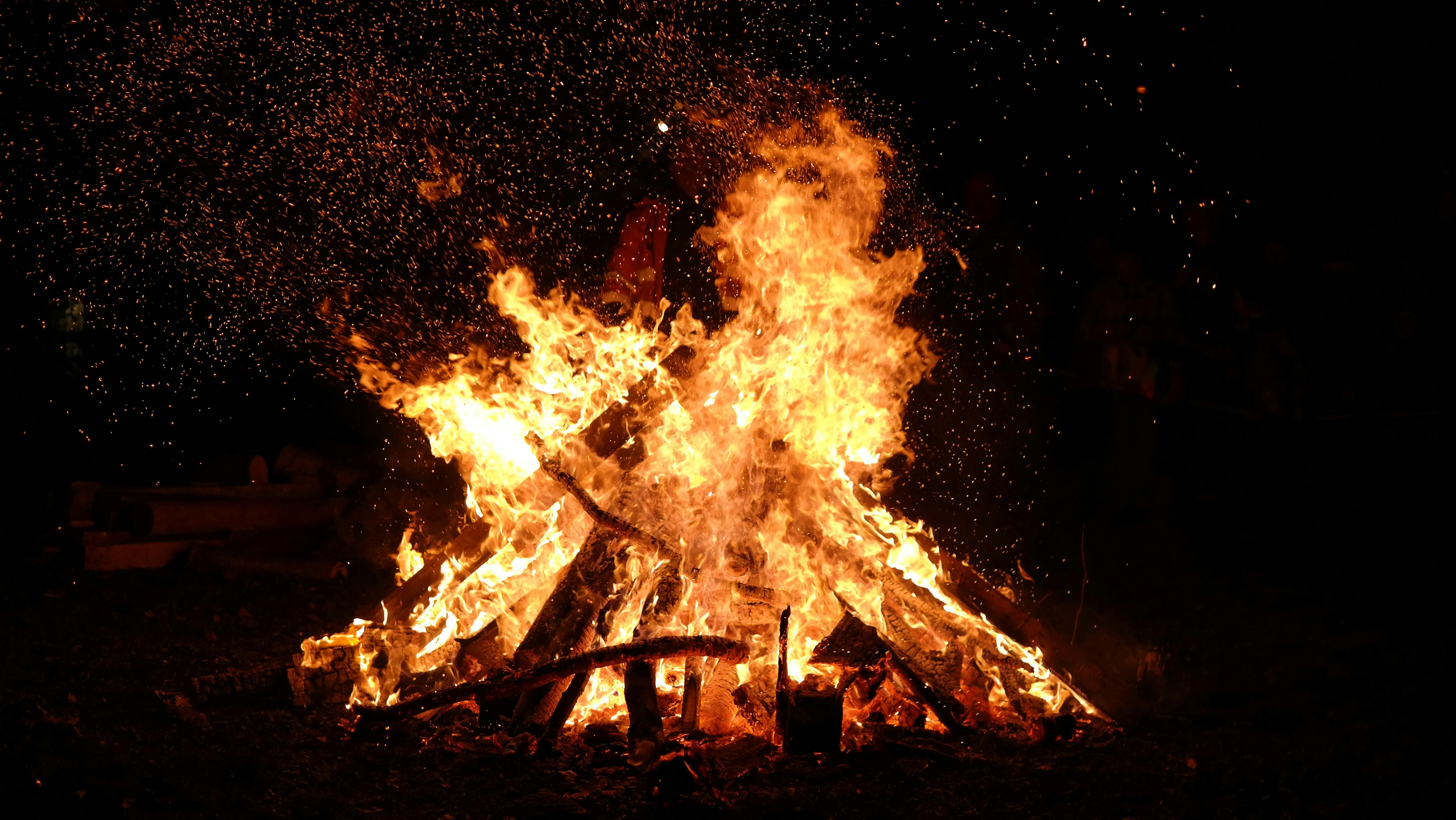
 Bonfire Photos, Download The BEST Free Bonfire Stock Photos & HD Images

 In June of 2022, a specially designed fireproof copy of The Handmaid’s Tale by Margaret Atwood was auctioned for $130,000 USD to support PEN America’s efforts to fight book bans. A delightfully over-the-top promotional video shows Atwood blasting the book with a flamethrower, from which it emerges unscathed. While constructing all future books out of heat-resistant aluminum and space-age steel wouldn’t actually solve any problems, the fireproof book is an act of defiance against that recurring symbol of fear and anti-intellectualism, the bonfire. It announces that the written word can always adapt to outlast the forces that would try and destroy it.

Looking to history supports this claim. Despite sustaining irrecoverable losses over the millennia, literature has survived, and while fireproof editions may be the latest innovation in this long conflict, past societies made many innovations of their own. Let’s take a look at some ways in which texts of the past have been saved from the flames.

In the ancient world, a library itself can be considered a remarkable feat of the imagination. A prospect first available only to royalty, the gathering together of texts for their protection and study has remained a cornerstone of the literary world. The library of Ashurbanipal, king of the Assyrian Empire in the 7th century BCE, has been called by H. G. Wells "the most precious source of historical material in the world," and contained within its collection the legendary Epic of Gilgamesh. Ashurbanipal, a lover of literature, collected tablets from across his empire for preservation in his great library. Unfortunately, he was also a cruel and iron-fisted military leader of an empire hungry for growth. He used his empire’s expansion as a means to expand his collection, taking for his own the recorded knowledge of his vassal states until they eventually stage a rebellion, setting fire to the library in 612 BCE. Ironically, the heat of the fire baked the clay tablets stored inside, allowing them to be preserved for our viewing today. However, the wax boards, leather scrolls, papyrus, and other texts were destroyed. The knowledge of the library, conscripted by those in power, was forever lost to those to whom it belonged.

With the advent of the Protestant Reformation in the 16th century, book burning in Europe reached a fevered height. Martin Luther and the Catholic Church both used book burning as a political tool to alter public opinion. The efficacy of the printing press made complete eradication of controversial texts almost impossible, but both sides sought to utilize public book burnings to convey the ideological incompatibility between the old and the new. Rather than to institutions of church or state, it fell to private citizens, wealthy antiquarians, to preserve the endangered writings of the time. Even a single manuscript tucked away on a shelf can carry its knowledge to the future, its messages alive and well. Sir Robert Cotton makes a perfect example, possessing a rare book collection which surpassed that of the crown. His collection included the original bound manuscript of Beowulf and a fifth-century copy of the Greek Bible, among other treasures. As a secular private library, Cotton’s collection was safe from the shifting political tides of religious allegiance, allowing its contents to survive even today.

Perhaps the most infamous book burners in history, the Nazis waged a ceaseless war against any text which did not reflect their particular worldview. No library, institutional or private, was outside their reach, and the materials held at the Yiddish Scientific Institute was a particular target. Conscripted Jewish workers, nicknamed the Paper Brigade, began smuggling away books and other items from the Institute, secreting them away throughout the ghetto or passing them along to trustworthy outsiders. Two of the Brigade’s leaders, Abraham Sutzkever and Shmerke Kaczerginski, managed to eventually escape imprisonment, but the majority of the members were murdered. However, the group succeeded in saving between 30 and 40 percent of the irreplaceable Institute collection, what is now the largest collection of material about Jewish life in Eastern Europe in existence. Against the overwhelming political and martial force of the Nazis, the humble potato sack became a safer place for valuable books than even a respected research institute.

These anecdotes all demonstrate the clear value of the individual in preserving knowledge. Books have been burned by invading armies and established social institutions alike, but there are always those who can see past the short-term manipulation tactics and into the future. Whether you are a king, prisoner, or anything in between, your efforts could save a work of art or scholarship from destruction. Keep the works you value close. While systemic values may change, the preservation of knowledge by the individual ultimately benefits all. 

 For more on the topic, check out Richard Ovenden's Burning the Books: A History of the Deliberate Destruction of Knowledge

Thursday, September 14, 2023

scary stories to ban in the dark


Halloween is poking its little head around the corner -- for me, a deeply nostalgic holiday. Children are often drawn to the macabre and the weird, because that’s their existence: growing pains, lost teeth, with new dangers learned about and confronted and not yet made peace with. Halloween is the season to celebrate their most creepy selves, but the horror section of school libraries is always open, with books that let kids face fears head-on. I’m sure others can relate to younger me begging the school librarian for directions to the scary stuff. It was a sparse section then, in the early 2000s, with its crowning jewel being Alvin Schwartz’ three-part series “Scary Stories to Tell in the Dark.”


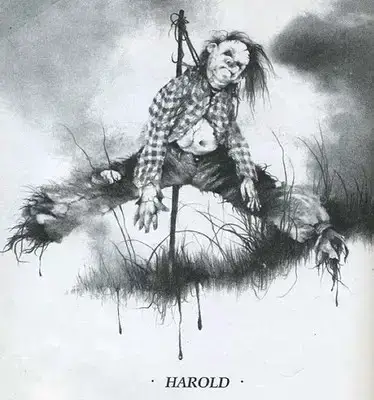
Y’all remember those books: bite-size tales of ghosts and ghouls, death and mayhem, accompanied by Stephen Gammell’s iconically horrifying illustrations in dripping black and white. They’ve been the stuff of nightmares for several generations. But October’s a good time to reminisce on “Scary Stories” not only because of Halloween; the first through seventh of the month also marks Banned Books Week. According to the ALA Office for Intellectual Freedom, Scary Stories was, between 1990-1999, the most challenged book in America. In the 00s, it moved down to number 7.


An example illustration


Parent groups, individual parents, and even a legislative action committee raised concerns, claiming that some of the disturbing or violent content was not appropriate for children. In a 1993 interview with Chicago Tribune, Sandy Vanderburg, a mother former teacher, brought up perhaps a common complaint about the stories: "There's no moral to them. The bad guys always win. And they make light of death. There's a story called `Just Delicious' about a woman who goes to a mortuary, steals another woman's liver, and feeds it to her husband. That's sick." In the same article, the author was compared to serial killer Jeffrey Dahmer.

Schwartz was unphased by the controversy. In an interview with Inverse, Cody Meirick (creator of Scary Stories: A Documentary) said, “Alvin Schwartz really loved the fact that his books were being banned. The attention to censorship within schools and libraries was just beginning to take shape around the time of his passing in the early 1990s. The American Library Association really started tracking and making lists in the mid-1980s, which was when his books began to really take off. But Alvin loved it and thought it was great publicity.” There is something particularly appealing about the controversial stuff when you’re younger, isn’t there? The books continue to garner fans, and even received a film adaptation in 2019.

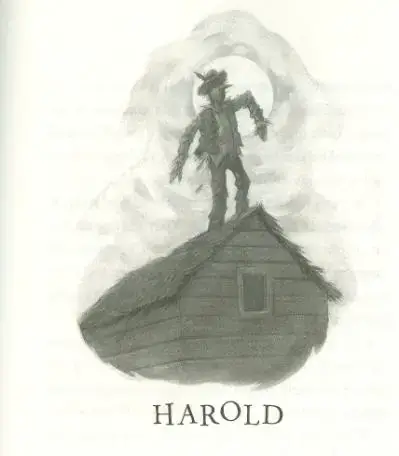
The first volume of “Scary Stories” was also republished on its 30th anniversary with less-nightmarish illustrations, now done by illustrator Brett Helquist, a former missionary for the Church of Jesus Christ of Latter Day Saints who is best known for his drawings in the 13 “Series of Unfortunate Events” books. Though gorgeous in their own right, these new “Scary Stories" illustrations just didn’t do it for fans of Gammell’s OG drawings. In 2017, the books were republished with the original artwork. 

Newer cover by Helquist


Scary Stories to Tell in the Dark: Gammell vs. Helquist
An example of Helquist's illustration

Flipping back through “Scary Stories to Tell in the Dark” as a grown adult, I was impressed by its packed bibliography, several spanning pages in a book that doesn’t have that many pages to begin with. Schwartz was a passionate folklorist, and put great research into his work. In an interview with Language Arts Magazine, he said of his process: “Basically, what I do with every book, is learn everything I can about the genre. This will involve a lot of reading and scholarly books and journals and sometimes discussions and scholarly folklorists... In the process of accumulating everything on a subject, I begin setting aside things that I particularly like. What's interesting is that eventually patterns emerge.” Wherever you stand on the question of how much violence or horror young readers should be exposed to, you can’t deny that a monstrous amount of work went into these books, and that even today, they remain a key title in the world of creepy fiction, as well as a contested title for concerned parents.

Thursday, August 10, 2023

The Literary Origins of Robots


School’s back in session. Time to learn something new. Do you know where the word “robot” comes from? 

   Meet Karel Čapek. He loves dogs. He loves gardening. He is a Capricorn with impeccable bone structure and an asteroid named after him. If he sounds like your perfect man, he is unfortunately both married and dead. Luckily, you still can encounter this Czech writer through the myriad works he left behind. 

   A true Bohemian, he was born in Bohemia, 1890. A true intellectual even at a young age, he performed well in school. A true rebel, he was kicked out of said school, due to membership in a secret anarchist society. His political views, both anti-fascist and anti-communist, later informed much of his work. 


Karel Čapek 


One particularly important production is his 1920 play R. U. R., or Rossum’s Universal Robots. This is the story of a factory that produces human-like machines, destined for hard labor and indistinguishable from real people; they eventually lead a revolt against their creators. The word “robot” describes these humanoid machines, and derives from the word “robota,” Czech for “work.” Though his brother, the painter Josef Čapek actually invented the word, Karel’s usage introduced it to the wider public. 

   A true lover of theater, Čapek wrote several other plays, including The Insect Play, a bug-filled satire of post WWI Czechoslovakia, or perhaps a harbinger of the 1998 cinematic masterpiece “A Bug’s Life.” Čapek even married an actress, Olga Scheinpflugová. She, like any good playwright’s wife, later died on-stage performing one of his plays, Mother. She was a writer too, prolific with sixteen novels, seven books of poetry, ten plays, and more.

   No fear if plays aren’t your thing, though. Čapek was also a novelist. Consider his 1936 sci-fi work War With Newts. It's a scathing indictment of contemporary European politics, shrouded in  a story of humans’ war with a race of intelligent newts. 

    If fiction doesn’t do it for you, Capek wrote plenty of nonfiction too. The Gardener’s Year chronicles his year spent in the garden, recording meditations on flowers, battles with unruly garden hoses, and tips for seed-planting. Dashenka or The Life of a Puppy follows the exploits of his fox terrier Dashenka in her first year of life. Goodreads’ description for it reads: “A naughty puppy's log book, followed by the fairy tales Capek told his puppy while trying to get her to sit still for photos, followed by the endearing photos.” 


Dashenka  


Though nominated for the Nobel Prize seven times, Čapek never won it. Nevertheless, his legacy endures as one of the most important Czech writers, a key figure in establishing a Czech PEN Club, a contributor to epistemology and politics, and, of course, promoter of the word “robot.” 


You can purchase some of his works from Eagle Eye Book Shop! Just follow the links below.


R.U.R.: https://eagleeyebooks.com/book/9780141182087 

The Gardener's Year:  https://eagleeyebooks.com/book/9781529096248  

The War with the Newts: https://eagleeyebooks.com/book/9781612190235


Tuesday, July 25, 2023

Give Thanks to Zucchini on August 8th!


When researching upcoming holidays, national days and other summer celebrations in search of inspiration, I came across the little known and eye-catchingly strange “National Sneak Some Zucchini Onto Your Neighbor's Porch Day,” taking place on August 8th. Invented by eccentric actor Thomas Roy, the day purportedly exists due to the zucchini plant’s tendency to produce, produce, produce far more fruits than can be consumed by a typical home grower. Sneaking a basket of stripey green squash onto your neighbor’s porch helps take care of your excess produce, promoting communal food sharing and seasonal cooking along the way!


In this spirit of season-appropriate cooking, I would like to share my favorite zucchini-centric recipe: Zucchini Taglierini! For other recipes featuring zucchini (or courgette in French), check out The Year of Miracles, shortlisted for the 2023 Andre Simon Best Cookbook Award!


Zucchini Taglierini


Ingredients

Pasta of choice (the original recipe calls for handmade taglierini, I usually use penne rigate)

8 oz small green or golden zucchini

1 lemon

6 tablespoons virgin olive oil

5 tablespoons pine nuts (chopped walnuts are a decent substitute)

2 large shallots, thinly sliced

4 teaspoons capers, rinsed

2-3 sun-dried tomatoes, cut into strips

Salt and pepper


1. Bring a pot of water to boil.

2. Slice the zucchini diagonally into ⅛-¼ inch thick slices. Line up the slices and cut them into narrow matchsticks. Each one will be tipped with green or gold.

3. Heat 2 tablespoons of olive oil in a small pan and add the nuts. Cook them until they begin to color, then add the shallots. Cook the two together on medium-low heat until the shallots are soft and the pine nuts are browned. Transfer them to a wide bowl and add the rest of the oil, capers, and sun-dried tomatoes. Season with salt, freshly ground black pepper, and about ½ teaspoon of lemon juice (to taste).

4. Add salt to the boiling water, drop in the zucchini matchsticks, and cook for 1 minute. Scoop out the zucchini, shake off the water, and add it to the bowl with the other ingredients.

5. Add the pasta to the boiling water and cook to preference. Add the cooked pasta to the bowl with the rest of the ingredients. Toss the pasta and other ingredients together and serve.

Monday, July 24, 2023

snowy selections to keep heat at bay


The shoe-melting hot concrete and blistering air of Georgia summer have me dreaming of snow. If you too like arctic escapes in your literature, these are the titles for you. 


"The Writing Retreat" by Julia Bartz

A bone-chilling writer's nightmare, set in snow-capped rural New York. A young novelist is accepted to a horror writers’ retreat, hosted by her favorite author in a remote gothic castle where demonic possession potentially once took place. But when things seem too good to be true, they usually are. Our heroine’s ex-best-friend, now a sworn enemy, is in attendance. The stakes rise as the writers learn they have a month to write an entirely new novel, with the winner getting a cushy publication deal. The competition is cutthroat. At first, metaphorically. Later, literally. The surrounding snow blocks easy escape when things get bloody.  Click To Buy Here


 "Migrations" by Charlotte McConaghy

 If you’re ever feeling too happy, no worries; this book will fix that. Its draw is the double-whammy of heartbreak and climate change. The protagonist runs from past failures in love and towards the arctic to study the last-ever migration of terns. She hates fishermen, but hitches a ride on a fishing boat. Tensions are taut on this boat as icebergs and oceanic snowstorms carve away what little sanity the crew clings on to. Mutiny brews. The plot veers towards the melodramatic, but that makes sense: our heroine is hapless, and her beloved birds are dying (as is most life on Earth). Get ready to feel snow in your hair and the salty sting of the ocean (or maybe your tears) with this one.  Click To Buy Here


"The True Deceiver" by Tove Jansson

Our chilly main character is Katri Kling, incredibly intelligent and ferociously antisocial. She lives in a snowy Scandinavian village, caring for no one but her brother and dog. Further away lives Anna Aemelin, a reclusive children’s book illustrator in a gorgeous house coveted by Katri. Braving snowstorms on foot, Katri treks with weekly supplies to Anna’s house, taking over the old courier’s route as she tries to worm into Anna’s life and take over the house. The author, Tove Jansson, is most famous for her children’s books about the Moomins, so the psychological twistiness of this one is deliciously different from the usual. It’s still somehow cozy: the glow of lamps on snow, a hearth warming to keep cold at bay. Click To Buy Here


“Moon of the Crusted Snow” by Waubgeshig Rice

An Anishinaabe First Nations community prepares for the winter ahead. A sudden blackout severs telephones, electricity, all connections to the wider world. Community leaders try to curb the peoples’ panic as supplies dwindle. Interlopers from the South bring news of the apocalypse striking cities beyond the reservation. Snow is a deadly obstacle in this novel, stalling trucks and killing youngsters, sliding under even the heaviest coats of the fearful and starving. But, the warmth of community keeps the worst frost at bay.  Click To Buy Here


Are the Classics Unconditionally Good?

     Despite being one of the largest genres of books, or maybe because of this, the Classics have very little in common. While genres like ...